
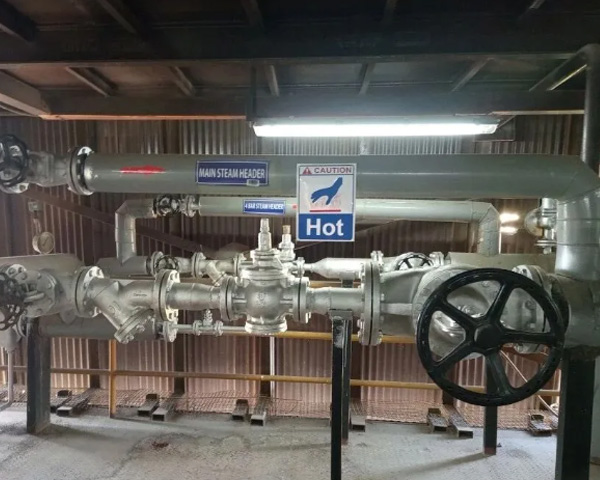
To reduce steam consumption and lower costs in the oil refining plant,this paper summarizes steam energy saving measures from aspects such as adjustment of oil refining process parameters, equipment maintenance,pipeline optimization and transformation, heat energy recovery,investigation and treatment of leakage points, and application of new energy-saving technologies. Practice has shown that measures such as reducing bleaching temperature, controlling the amount of direct steam used in deodorization, adjusting fatty acid circulation temperature,lowering the outlet water temperature of the chiller, performing regular equipment maintenance, optimizing pipelines, recovering heat energy,regularly investigating leakage points, and adopting new energy-saving technologies can effectively reduce steam consumption in the oil refining plant and improve the economic benefits of the oil plant.
The consumption of energy sources such as steam, electricity, and natural gas during the oil refining process accounts for approximately 35% to 45% of the production cost, among which steam accounts for about 8% to 15%. Currently, steam energy consumption in domestic oil refining plants varies greatly. The main reasons for high steam consumption include: small production line scale, relatively outdated processes and equipment; and the lack of timely application of new energy-saving technologies. Continuous refining producers still need to improve in areas such as the reasonable selection and use of processes and equipment, and the comprehensive utilization of energy in the plant. This paper discusses methods to reduce steam consumption in the refining plant based on energy-saving practices, focusing on the adjustment of production process parameters, equipment maintenance, pipeline optimization and transformation, heat energy recovery,investigation and treatment of leakage points, and the application of new energy-saving technologies.
Adjustment of Production Process Parameters
- The bleaching temperature for soybean oil in oil refining is generally around 82°C-105°C. Under conditions where the oil has good heat bleaching effect, low bleaching clay addition (clay consumption 3-4 kg/t oil), bleaching time of 30-35 min, and bleaching vacuum of 60-75 mbar, reducing the bleaching temperature from 105°C to 95°C lowers the heat required for the bleaching process, improves the heat exchange efficiency during the degumming and deacidification of crude oil, and reduces the consumption of steam for heating crude oil.
- Under the premise of ensuring the deodorized oil acid value meets the standard (internal control index acid value ≤ 0.1 mg/g), taking a 1000 tons/day chemical refining production line as an example: the bleached oil acid value is 0.11-0.17 mg/g; the deodorizer structure consists of a heating layer, a stripping section in the packed bed, a tray section, and a stripping section after the packed bed; the deodorization temperature is 243°C; the deodorization vacuum is 1.5-3.0 mbar; the deodorization time is about 100 minutes. The amount of direct steam for deodorization is generally controlled at 140 kg/h. When producing packaged oil (with stricter requirements for oil reversion,internal control index reversion ≤ 0.03 mg/g), the direct steam amount for deodorization is controlled at around 165 kg/h.
- When the outdoor environment temperature is around 10°C in spring,the fatty acid circulation temperature is increased from 45°C to 50-55°C. This shortens the time for conveying fatty acids outdoors and allows the steam for the heat tracing pipes to be turned off, thereby reducing steam usage.
- The vacuum degree of the deodorization system is affected not only by the deodorization temperature, the amount and quality of direct steam, but also by the suction capacity of the steam ejector pump and the water ring pump, and the cooling effect of the steam ejector pump condenser. When the deodorization vacuum system consists of a 2-stage steam ejector pump, a water ring pump, and chilled water, lowering the chiller outlet water temperature from 7°C to 5°C improves the condensing effect of the first-stage steam ejector pump condenser. Consequently, the amount of mixed gas entering the second-stage steam ejector pump and the water ring pump is reduced, lowering the vacuum in the deodorization system. However, since the suction capacity of the steam ejector pump and water ring pump is fixed, the vacuum remains around 200-300 Pa after lowering the chiller outlet water temperature. In this case, while ensuring a deodorization vacuum of 200-300 Pa, the amount of steam used by the ejector pump can be reduced.
- Factors affecting the cooling effect of the first-stage steam ejector pump condenser
- (1)The amount of mixed gas extracted by the first-stage steam ejector pump and the temperature of the heat source.
- (2) The amount of deposits on the condenser surface.
- (3) The temperature of the chilled water.
- Next steps for improvement
- (1) While ensuring the deodorized oil meets the standards for acid value, color, reversion, etc., minimize the deodorization temperature and the amount of direct steam used, thereby reducing the amount of mixed gas extracted by the steam ejector pump and lowering the heat source temperature.
- (2) Strengthen the inspection of the spray effect of the fatty acid collection system to avoid short-circuiting of the spray collection.Prevent part of the deodorizer distillate from passing directly through the demister and being extracted by the ejector pump, entering the low-temperature condenser and adhering to the surface of the condenser tubes, which would reduce the cooling effect of the condenser.
- (3) Add a pH value detector at the outlet of the condenser flushing pump. When the pH value is below 8.5, automatically start the alkali pump to add liquid alkali to the flushing water. When the pH value is above 10.5, the alkali pump automatically stops. This ensures the condenser flushing water is alkaline, cleaning deposits on the condenser surface and improving the cooling effect of the condenser.
- (4) Replace the \”chilled water\” vacuum system with an ethylene glycol-type \”dry ice\” condensation vacuum system to lower the temperature of the cooling medium in the condenser and improve thecondensation effect.
- Factors affecting the cooling effect of the first-stage steam ejector pump condenser
Equipment Maintenance
- During shutdown periods, use oil cleaning agents to clean the oil-oil heat exchangers in the plant. This improves the heat energy recovery rate and reduces the amount of steam used for heating crude oil, the neutral oil to be separated, and the pre-bleached oil.
- Clean the interior of the deodorizer to remove internal oxidized oil residues and impurities (such as leaking bleaching clay), which can affect the acid value of the oil and lead to an increase in the amount of direct steam used for deodorization.
- Pipeline Optimization and Transformation
- Relocate the steam for cake blowing to a point before the main steam control valve. Separate the two steam lines after the main steam control valve to avoid a sudden increase in steam usage during cake blowing that could cause pressure fluctuations in the steam supplied to the ejector pump. This solves the problem of process and finished product quality instability caused by vacuum fluctuations in the deodorization system.Through this pipeline modification on the 1000 tons/day chemical refining production line at Zhenjiang Plant, the steam used for the deodorization vacuum ejector pump was reduced by 50 kg/h, and the steam consumption per ton decreased by approximately 1 kg/t.
- When a processing plant has multiple production lines sharing a common steam pipeline with a pressure of approximately 0.9-1.0 MPa, and considering that the steam consumption for a single 600 tons/day refining line is about 1.2 tons/hour, to reduce steam loss, an DN80 branch line is added to the DN150 pipeline supplying steam from the power plant to the refining plant. Taking a 600 tons/day chemical refining production line as an example, steam loss was reduced from approximately 150 kg/h to about 96 kg/h, and steam consumption per ton decreased by about 2 kg/t. Moreover, the steam supply line can be switched flexibly. For one or two production lines, the DN80 steam line is used. When three or more lines are operating and the total steam consumption is less than the maximum transport capacity of the DN150 line, the DN150 steam line can be used.
- Add a flow restriction orifice plate to the cake blowing pipeline of the Alma filter in the bleaching process. This increases the internal pressure inside the filter during cake blowing, allowing the filter cake layer to be pressed tighter and enhancing the ability of oil and steam to pass through the cake layer. Under the premise of controlling the oil content in the spent bleaching clay to a manageable level, this shortens the cake blowing time and reduces steam consumption.